Have you gotten your grocery list pimped yet? That' right, send me your grocery list, and I'll give it a free healthy makeover! Details are here!
I’ve worked in the processed food industry for several
years, up until I had my son last year. Although I liked the challenging
environment and the people I worked with, I was never comfortable with the actual marketing of processed food. And the more I learned about how food is
made and marketed to consumers, the more uncomfortable I became.
I had never really thought about food companies before I
worked for one. I just assumed, like most people, that the products they
produced weren’t really that bad. After all, if they were, they wouldn’t be
allowed to put them on the supermarket shelf, would they?
What I realize now is that goal of food companies is not to
make good food. Food companies are neither good guys nor bad guys. Their goal, like
every other company, is to make consistent and growing returns for their
shareholders.
The grocery market in North America is well developed;
there’s not a lot of growth happening. Input costs are rising, and competition
is fierce. So how does a food company make money in this environment? Well,
they do whatever it takes to attract you to their product, even if that
involves a certain amount of misrepresentation.
Just look at the packages all around you to see how true
this is. Crackers that say they are ‘made with real vegetables’ are usually
little more than oil, white flour and salt, with a little dehydrated vegetable
thrown in for colour. ‘Multigrain’ bread is usually white bread with a few
grains added to make it look healthier. ‘Chocolatey’ flavoured bars often have
no actual chocolate in them; honey nut cereal usually has very little honey or
nuts.
I’m not trying to be a food vigilante here. I don’t think
you should grow all your own corn or join a CSA or purge all forms of sugar
from your cupboard. I recognize that most of us don’t have the time or the
mental resources to devote to living this way (not to mention that a life
without sugar would be a very sad one!)
But I do think that the responsibility falls on us to be
educated about what we’re buying. The food companies are not going to do it for
us; in fact they are going to do everything they can to make it as difficult as
possible. It’s up to us to wade through all the claims and the marketing jargon
and the fancy packages to make the best choices for us.
I know that sounds daunting. Who wants to go to the grocery
store as if they are crossing enemy lines?
But the truth is, it’s not that hard to navigate the grocery
store battlefield if you stick to a few basic rules:
1) Never believe anything you see on the box. Everything on
it – the claims, the colour of the box, the flavour name, the photography - is
designed to persuade you. Ignore it.
2) The label never lies. Flip to the back of the package and
read through the list of ingredients. Leave behind anything with ingredients
you can’t pronounce, and if one of the top three ingredients is corn, white
flour, sugar or soy, try to limit how much you buy.
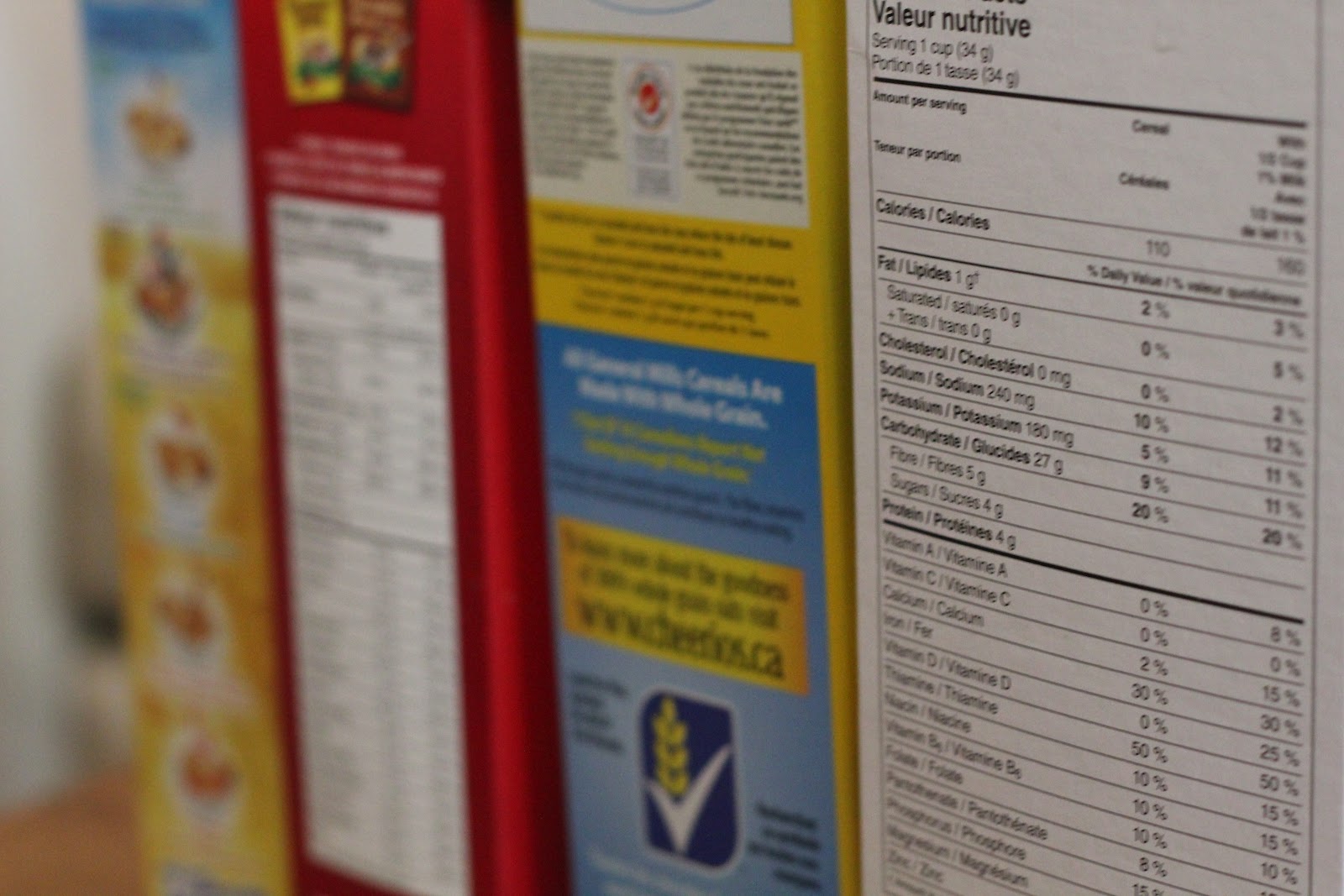
3) Read the nutritional panel. First, look at the top to
see how much a serving is (it might be a very small amount of the actual
package, which makes all the nutritional information look rosy.) Then, glance
at the key lines to make sure they look reasonable: Calories, sugar, fat, salt,
fibre.
Then – and only then - make an informed decision of whether
to put it in your cart. That’s right – I’m not saying that you automatically
curse and spit on anything that isn’t of a stellar nutritional profile. But I
do think you need to know what the product really is before you make the decision to
buy it.
I think processed food serves a place in people’s lives. It
is convenient. It is often portable. Sometimes, it’s the only way you can get
dinner on the table or grab breakfast before you run out the door. But I do
think we need to be aware of exactly what it is we’re eating, and make a
conscious decision when we decide to eat it.
This is the beginning of a series of articles I will be
writing about the processed food industry to expose some of the mistruths and
help you make better decisions at shelf. Remember: companies will only make
what we decide to buy, so the best way to change what they make is to vote with
our dollars.